
A visual guide to understanding peptides, research, measurements, reconstitution, schedules and storage — starting from zero.

This guide assumes you know nothing about peptides yet. Read the basics once, then use the contents page to jump to your compound. Every compound page has the same layout, so once you can read one you can read them all. Tap any name or page number on the contents page (page 2) to jump straight there.
Read these pages once, in order: what a peptide is, the vial, measurements, the maths, what you need, mixing a vial, drawing a dose, what to expect and titration.
Pages 4–16Start with your goal (page 20) or tap a name on the contents page. Each compound has a plain-English summary, a dose table, dosing steps and what it stacks well with. Page 17 shows how to read one.
Pages 20–45Check what you need (page 11), how to mix it (page 12), what to do if it goes cloudy (page 13), how to store it (page 18) and the 28-day rule (page 19). The free calculator does the dose maths for you.
Pages 11–15Compare all 19 compounds side by side (page 46), check the FAQ (page 47), look a word up in the glossary (page 49) or keep track in your dose log (page 50).
Pages 46–50
Peptides are tiny chains of building blocks called amino acids. Your body makes thousands of them and uses them as short messages: “you’re full”, “repair this”, “release that hormone”.
One tiny building block. Your body uses about 20 different kinds.
A short chain of amino acids, usually 2 to 50. Small enough to work like a message.
A much longer chain, folded up. Builds and runs the body.
Your body clears its own natural peptides in minutes and just makes more. Lab-made versions are tweaked to last longer so they have time to work — the longer one lasts, the less often you need it. Not strength: lasts hours → daily (SS-31, Semax); lasts days → weekly (Tirzepatide, Semaglutide).
A few compounds in this guide, like NAD+ and 5-Amino-1MQ, are small molecules rather than true peptides. They’re included because they’re researched alongside them.
Peptides aren’t exotic. They’re in the food you eat, they’re made by your own body, and researchers are studying them for a surprisingly wide range of jobs.
Peptides occur naturally in protein-rich foods like these. Because they’re smaller than proteins, the body can often take them in more easily, and many supplements use peptides taken from the same sources.
Tells your cells to take in sugar from your blood.
Tells your brain you’ve eaten enough. Several compounds in this guide copy it.
Sometimes called the bonding hormone. Involved in trust and childbirth.
Bioactive peptides are peptides with a beneficial effect on the body. Which job each one does depends on the order of its amino acids. Research suggests they may:
Collagen is the protein that keeps skin, hair and nails healthy. Collagen peptides are collagen broken down so the body can absorb it easily. Reviews from 2022 and 2023 suggest they may help reduce or delay skin ageing.
Collagen is vital for healthy skin, so collagen peptides may help wounds heal faster. Researchers are also studying antimicrobial peptides as a possible answer to antibiotic-resistant bacteria.
Studies suggest collagen peptides can raise bone density in postmenopausal people with reduced bone density, and a longer-term follow-up found the same.
Studies from 2019 and 2022 found that peptide supplements plus resistance training built more strength and muscle than exercise alone. Growth-hormone-releasing peptides work by prompting your body to release its own growth hormone (see page 30).

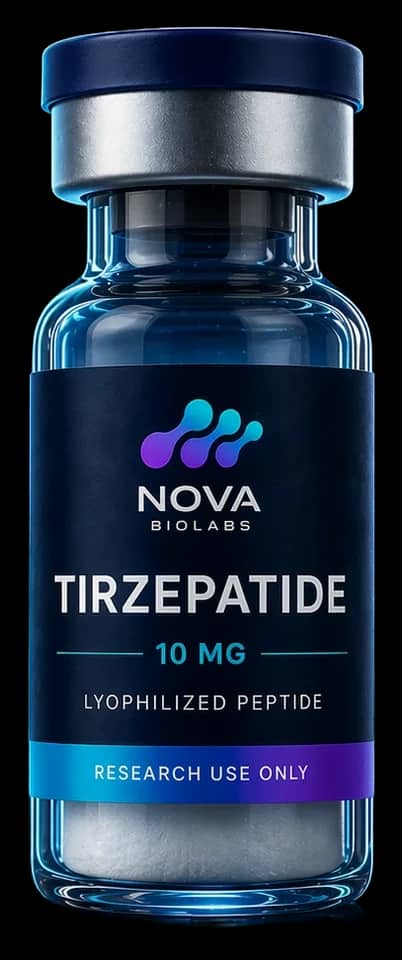
Your peptide arrives sealed in a small glass vial like this one. Every part has a job — and once you know what you're looking at, the rest of this guide gets much easier.
Sealed and sanitised before each draw with an alcohol swab.
Holds the compound, protected from air and contamination.
Freeze-dried — this is why compounds arrive as a powder rather than a liquid.
Adding a liquid to that powder to turn it back into something you can draw up.
A measure of mass — how much compound, by weight.
1,000 times smaller than a milligram.
A measure of liquid volume — not how much compound.
The markings on a U-100 insulin syringe: 100 units = 1 mL. Not the same thing as IU.
A measure of biological activity, not weight. HGH is dosed in IU, not mg. IU can't be converted to mg without knowing the exact compound, so always use the unit written on that compound's page.
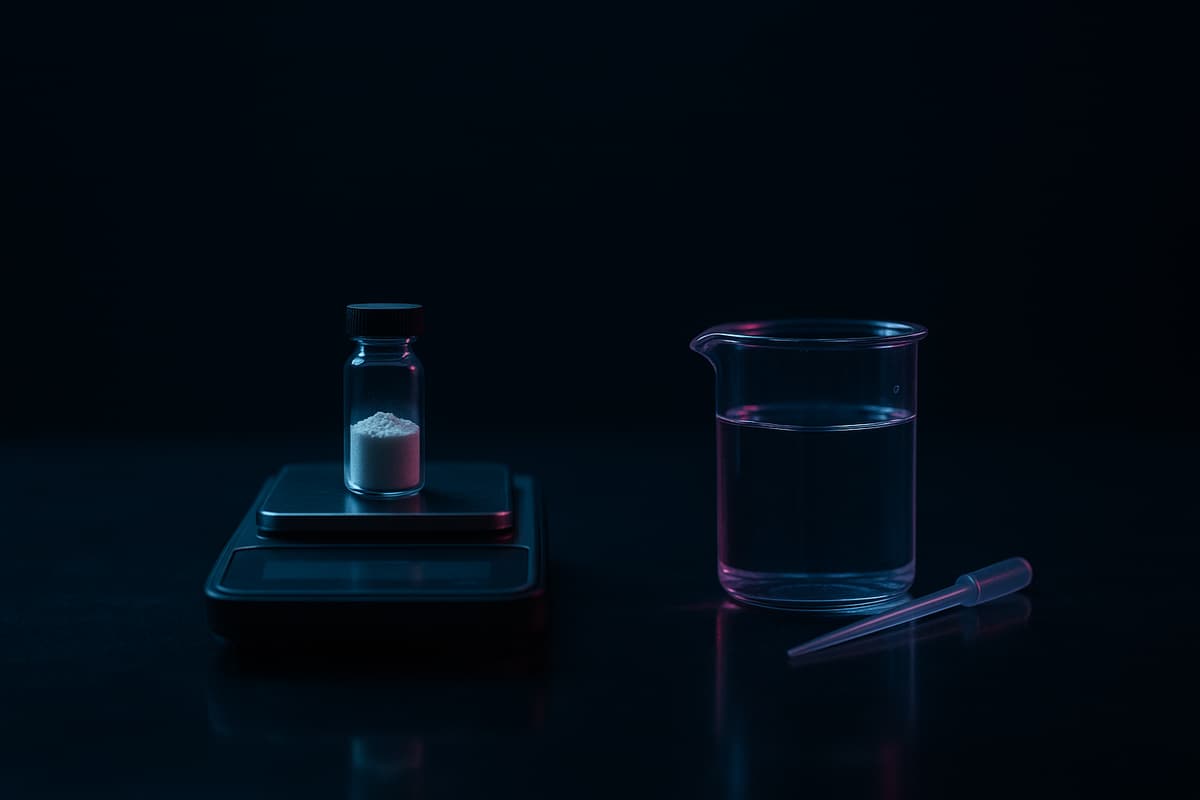
10 mg + 2 mL does not mean 12 of anything.
Think of squash: the same amount of concentrate mixed with less water is stronger; mixed with more water, it’s weaker. Peptide concentration works the same way.
Every 1 mL of the mixed solution contains 5 mg of compound. Concentration is simply how much compound is in each millilitre of liquid: mg in the vial ÷ mL of water added.
The vial always holds the same 10 mg of compound. Adding more water just spreads it out, so each mL is weaker.
| Water added | Concentration | Draw to |
|---|---|---|
| 1 mL | 10 mg/mL | 2.5 units |
| 2 mL | 5 mg/mL | 5 units |
| 2.5 mL | 4 mg/mL | about 6 units |
More water means a bigger, easier-to-read draw. That’s why 2 mL is the most common choice. Your dose doesn’t change — only where you draw to.
Bigger vial? Add proportionally more water: ~2–2.5mL for 20mg, ~2.5–3mL for 40mg, ~3mL for 60mg — or use the calculator.
Enter your vial size, the water you added and your dose. It shows exactly where to draw on a U-100 syringe.
Three quick steps turn any vial and dose into a mark on the syringe. Or skip straight to the calculator at the bottom of the page.
| Vial | 1 mL water | 2 mL water | 2.5 mL water |
|---|---|---|---|
| 5mg vial | 5 mg/mL | 2.5 mg/mL | 2 mg/mL |
| 10mg vial | 10 mg/mL | 5 mg/mL | 4 mg/mL |
| 20mg vial | 20 mg/mL | 10 mg/mL | 8 mg/mL |
| 30mg vial | 30 mg/mL | 15 mg/mL | 12 mg/mL |
Enter your vial size, water and dose to get the exact syringe mark instantly.
Gather everything before you open a vial. It makes mixing calmer, cleaner and safer. Here is the full list, and what each item is for.
The dry powder. Check the label matches what you ordered, and that the vial is sealed and undamaged.
IncludedThe mixing liquid: sterile water with 0.9% benzyl alcohol to keep the vial safe to reuse for 28 days. Not plain water.
Buy bacteriostatic water →We advise a 1 mL (100-unit) insulin syringe for everything: adding the water and drawing every dose. Its marks are easy to read (1 unit = 0.01 mL). Always use a new, sterile syringe.
To wipe both vial stoppers before every puncture, and the skin before an injection.
A rigid, puncture-proof container with a lid, for used needles and syringes. Never put them loose in the bin.
Main body of the fridge at 2–8°C, away from light. A peptide storage case keeps vials together and dark.
See the storage case →Write the compound, concentration, date mixed and discard-by date on every mixed vial.
Turns your vial size, water and dose into an exact syringe mark. No maths needed.
Open the calculator →Reconstitution simply means adding a liquid to the dry powder so it becomes a solution you can draw into a syringe. Use bacteriostatic water — sterile water with a small amount of preservative (0.9% benzyl alcohol) — not plain sterile water, so the mixed vial lasts 28 days.
Wash your hands, wipe your surface and lay everything out. Let the peptide vial and the water reach room temperature — mixing cold liquids can cause cloudiness.
Wipe both rubber stoppers with a fresh alcohol swab and let them air-dry a few seconds — wiping through wet alcohol can push it through.
With your 1 mL syringe, draw 1 mL of air, inject it into the water vial, invert and draw up to 1 mL of water. Adding 2 mL, the most common amount? Do it in two 1 mL draws.
Hold the needle at roughly 45° against the inside wall, just above the powder. A hard direct stream damages the peptide and whips up foam.
Roll the vial slowly between your fingers until every trace of powder is gone. Shaking can break down the peptide’s structure.
Hold it up to a light. It should be clear with no floating particles. If it isn’t, see the next page before you use it.
Write the compound, concentration and date mixed. Store at 2–8°C, use within 28 days, never refreeze (see page 19).
Use the free calculator at novabiolabs.co.uk/calculator to turn your dose into a syringe mark. Fresh swab on the vial top before every draw.
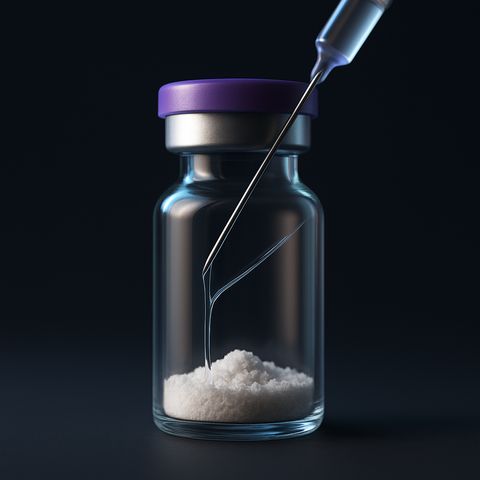 Step 4 · Down the wall
Let the water trickle down the glass instead of blasting the powder.
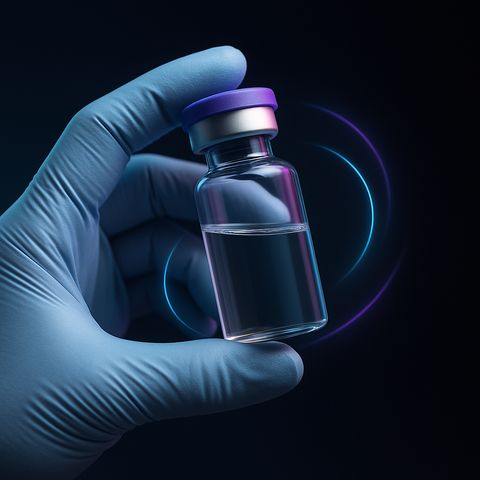 Step 5 · Swirl, don’t shake
Slow rolling between your fingers. Patience beats force.
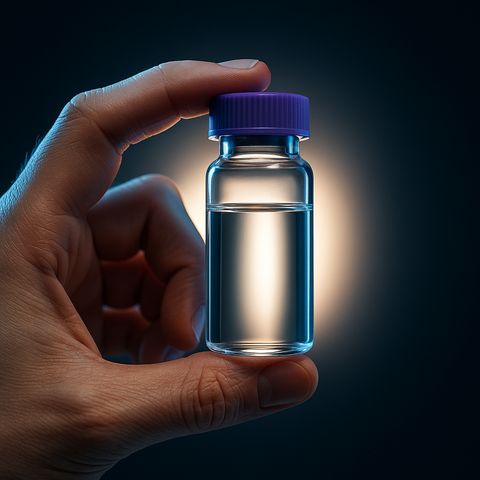 Step 6 · Hold to the light
Clear and colourless with nothing floating is what you’re looking for.
Cloudiness is one of the most common things people notice after mixing. It happens often, and the reason is simple: peptides are fragile molecules. Cold liquids, heat, rough handling, time and contamination can all nudge one out of solution — so a quick look before every draw is part of the routine.
Clear and colourless, nothing floating. This is what a properly mixed vial looks like.
Often just not fully dissolved yet, or a cold vial. Rest it and swirl gently — see below.
Milky, stringy, particles floating, or a colour change that doesn’t clear on resting.
Mixing a cold vial with cold water is a very common cause. Let both reach room temperature first.
Shaking or a hard jet of water foams the solution and can make the peptide clump. Swirl gently instead.
Warm vials break down faster. Left out on a counter, in a hot car or in sunlight, a peptide degrades sooner.
Ice crystals can damage the peptide as it freezes and thaws. Once mixed, never refreeze.
Water lets the peptide slowly break down. The longer it sits mixed, the more likely it clouds — this is the 28-day rule (page 19).
Bacteria cloud a vial. Every needle puncture is a chance to let them in, so a fresh swab before each draw matters.
Leave it a few minutes at room temperature, then swirl gently. Some peptides just take longer. Never shake to speed it up.
Hold it to a light. Fully clear with nothing floating? You’re fine to carry on.
Discard it, note the batch number and contact Nova support through novabiolabs.co.uk. Don’t use a vial that stays cloudy.
Normal — leave it a few minutes. Lots of foam means add the water more slowly next time.
The needle has sliced a piece from the stopper (“coring”). Discard that vial rather than filtering it.
Once your vial is mixed and clear, this is the routine for each dose. Slow and clean is always better than fast.
Wash your hands and wipe your surface. Take the vial from the fridge and check it is clear (page 13). Wipe the stopper with a fresh swab and let it dry.
Pull the plunger back to your dose mark so the syringe fills with that much air. Use the calculator to find your mark: novabiolabs.co.uk/calculator.
Insert the needle through the stopper, push the plunger to inject the air, then turn the vial upside down. This stops a vacuum building.
Slowly pull the plunger back to your mark. Tap out any large bubbles, push them back in and re-check the mark, reading at the edge nearest the needle.
Choose a spot on the abdomen, front of the thigh or back of the upper arm (below). Wipe it with a swab and let it dry. Change site every time.
Pinch a fold of skin, insert the needle just under the skin (about 45–90°), push the plunger slowly, wait a few seconds, then withdraw.
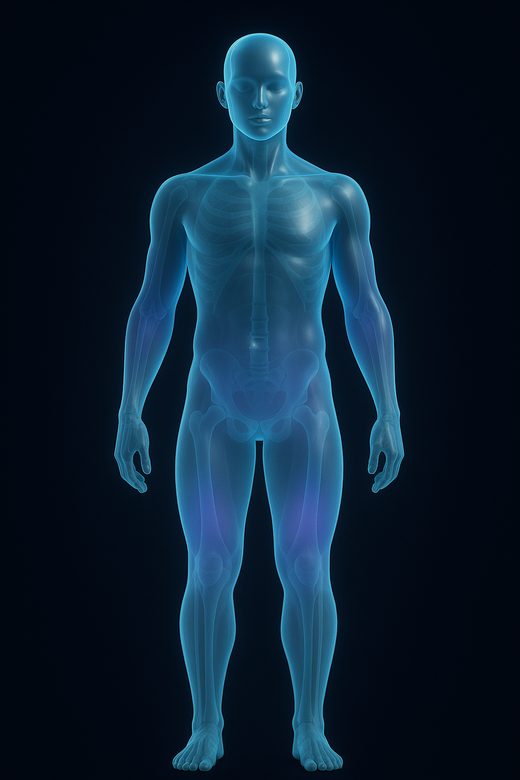 ABDOMEN
Just under the skin, into the fatty layer (subcutaneous): the route for almost every compound here. A few pages also mention intramuscular (muscle) or IV routes, which need hands-on training from a healthcare professional and are not covered. Abdomen: keep about 5 cm from the belly button. Thigh: front and outer. Upper arm: back of the arm.
Most people notice little or nothing at first, and any early effects are usually mild. Knowing what is normal, and what is not, helps you stay safe. This is a general guide, not a complete list and not medical advice.
Swelling of the face, lips, tongue or throat, difficulty breathing, a widespread rash or hives, chest pain, or you feel faint. These can be signs of a severe allergic reaction. Do not wait.
Titration means stepping a dose up gradually, on a set schedule, instead of starting at the full amount. Think of it as climbing a staircase rather than jumping to the top floor.
A new dose is a change for your body. Small steps give it time to settle before the next one.
Bigger isn't automatically better. The top dose in a table is a ceiling, not a target.
Change one thing at a time and you always know which step made the difference.
0.25 → 0.5 → 1 → 1.7 → 2.4mg, a step every 4 weeks.
1 IU in week 1, 2 IU in weeks 2–3, then 2–4 IU to hold.
The same dose from day one, for a set cycle of weeks.
A short run of roughly 10–20 days, then a break.
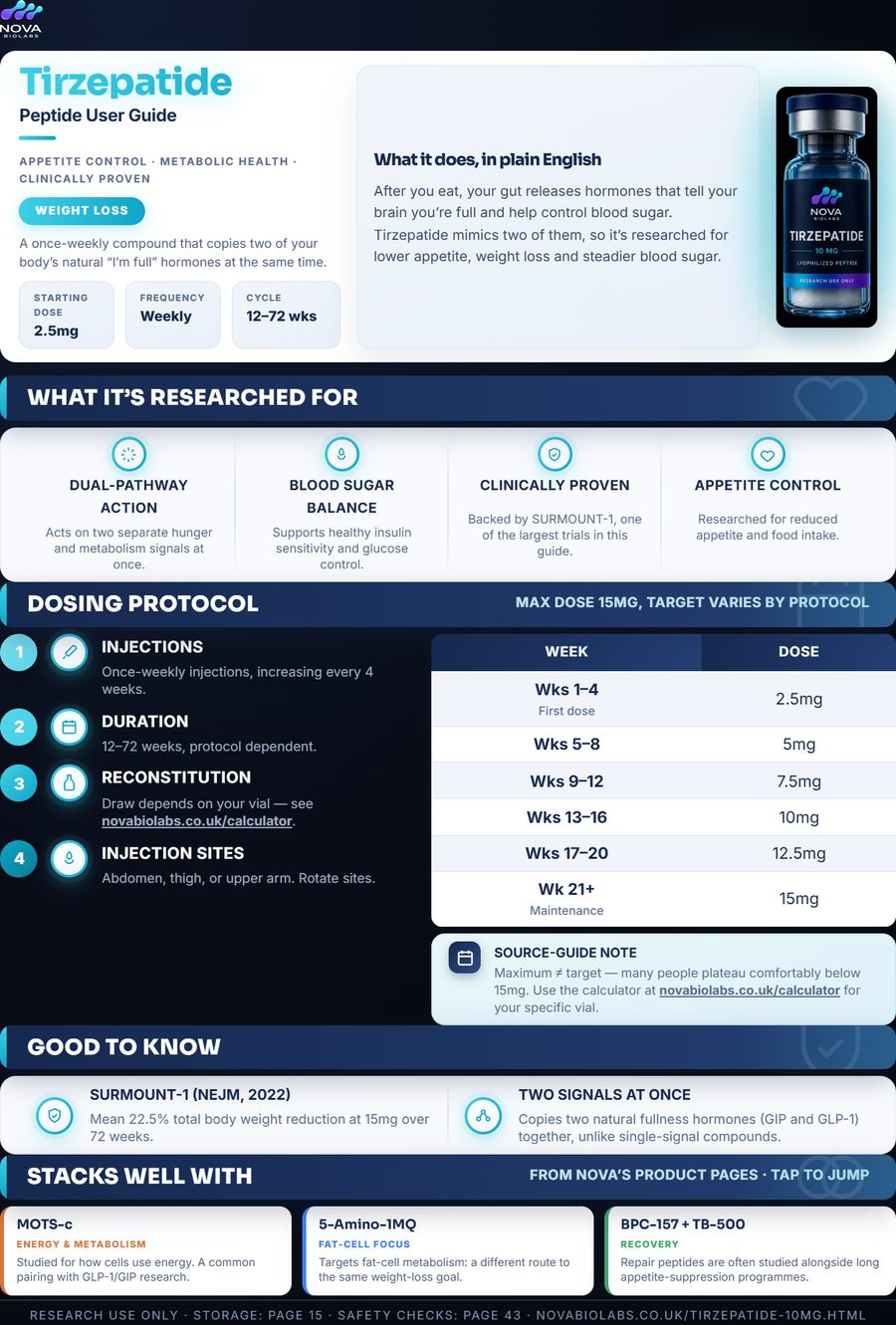
Every one of the 19 compound pages follows exactly this layout. Learn it once and you can read them all.
Compound name, category and a one-line description of what it is.
Your starting dose (week 1), how often you dose (EOD = every other day) and how long a cycle runs: a block of weeks, often followed by a planned break.
A short, jargon-free explanation of how it works.
The goals it is studied for, such as weight loss or repair, as four short cards.
Numbered steps plus a week-by-week titration table (“first dose” is what you start on in week 1). The dose is the same whichever vial size you buy.
Trial results or extra facts worth knowing.
Other compounds that are often studied alongside it for a combined goal. Tap one to jump to its page.
Where to find storage (page 18) and safety checks (page 46), plus a link to that product on the Nova site.
 12345678
Peptides are fragile. How you store them decides whether they still work on the day you use them — and it comes down to three things: cold, dark and time.
Fine while you’re using a vial over the coming weeks. Keep it in the main body of the fridge, not the door shelf.
Yes, unmixed powder can go in the freezer, and it’s the best choice if you’re keeping vials for months. Let a vial reach room temperature before you mix it.
Once water is added the clock starts. Fridge only, use within 28 days, and never freeze it. See page 19 for why.
Light and heat break peptides down. Whether it’s dry or mixed, in the fridge or the freezer, keep it in its box or a dark drawer, never on a windowsill or in sunlight.
Within 2 days, take it as normal. Later than that, skip and resume next week.
Take it as soon as you remember, unless it’s nearly time for the next one.
Take it as soon as you remember, then shift the pattern forward from today.
One missed day is fine. 3+ days missed? Restart from day one.
Once you add water to a peptide, the clock starts. Keep the vial in the fridge and use it within 28 days — four weeks, easy to count. You’ll also see 30 days quoted; both are cautious rules of thumb, and this guide uses 28.
Nobody can tell by looking at a mixed vial whether it is still fully reliable. Bacteria can start to grow and the peptide can slowly break down, while the liquid still looks perfectly clear. So instead of asking you to guess, Nova Biolabs takes a safety-first approach: one cautious, easy-to-follow limit. If in doubt, we’d always rather you discard a vial early than use one you can’t vouch for.
Dry powder is stable. In liquid, a peptide slowly breaks down, so it loses strength with time even in the fridge.
Each draw pierces the stopper and can let microbes in. Bacteriostatic water slows their growth but doesn’t make a vial sterile.
28 days assumes a steady 2–8°C. A vial left out, heated or cloudy at any point is finished sooner — don’t wait for day 28.
On the label: the day you mixed it and the “discard by” date, 28 days on.
A phone alert for day 27 means you never have to remember the count.
Work out how many doses a vial gives you (page 9) and make sure they fit inside 28 days.
An 8-week BPC-157 or GHK-Cu course outlasts one vial — that’s expected. Mix a new vial once the old one hits its discard date and carry on. Don’t top up an old vial or combine leftovers.
Start with what you want to learn about, then tap a compound to jump straight to its page. Each page ends with other compounds it is often studied alongside.
Compounds that copy natural “I’m full” signals, plus one aimed at fat-cell metabolism.
Peptides researched for helping tendons, muscle, joints and other tissue heal.
Copper peptide and antioxidant compounds researched for skin, collagen and cell protection.
Compounds that prompt your body to release its own growth hormone, or replace it directly.
Compounds researched for cell energy and how cells age, centred on the mitochondria.
Two short peptides from Russia: one stimulating and focus-boosting, one calming.
A lab-made copy of a natural hormone that affects skin pigment and appetite.

Compounds researched for appetite suppression and metabolic weight loss — full profiles start here with the dosing schedule reported in the source guide, and what to watch for.
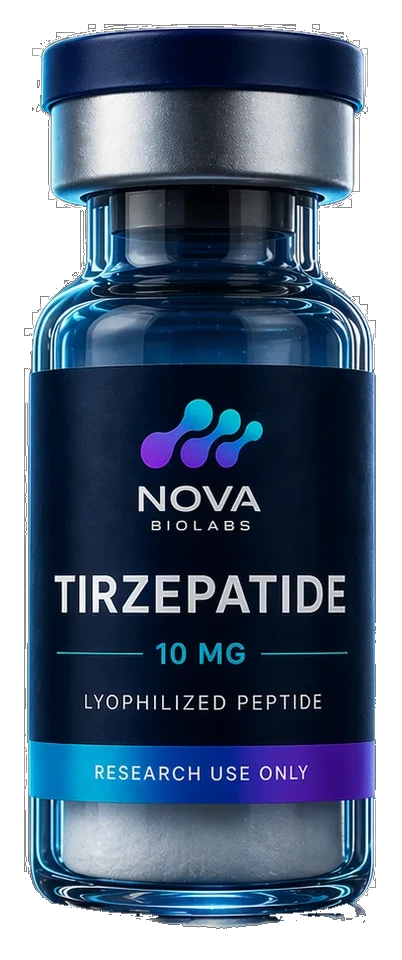
After you eat, your gut releases hormones that tell your brain you’re full and help control blood sugar. Tirzepatide mimics two of them — GIP and GLP-1 — so it’s researched for lower appetite, weight loss and steadier blood sugar.
Acts on two separate hunger and metabolism signals at once.
Supports healthy insulin sensitivity and glucose control.
Backed by a large human trial, one of the biggest for any compound here.
Researched for reduced appetite and food intake.
Once-weekly injections, increasing every 4 weeks.
12–72 weeks, protocol dependent.
Abdomen, thigh, or upper arm. Rotate sites.
| Week | Dose |
|---|---|
| Wks 1–4First dose | 2.5mg |
| Wks 5–8 | 5mg |
| Wks 9–12 | 7.5mg |
| Wks 13–16 | 10mg |
| Wks 17–20 | 12.5mg |
| Wk 21+Maintenance | 15mg |
Maximum ≠ target — many people plateau comfortably below 15mg. Use the calculator at novabiolabs.co.uk/calculator for your specific vial.
On average, people on the highest dose (15mg) lost 22.5% of their body weight over 72 weeks.
Copies two natural fullness hormones (GIP and GLP-1) together, unlike single-signal compounds.
Studied for how cells use energy. A common pairing with GLP-1/GIP research.
5-Amino-1MQFAT-CELL FOCUSTargets fat-cell metabolism: a different route to the same weight-loss goal.
BPC-157 + TB-500RECOVERYRepair peptides are often studied alongside long appetite-suppression programmes.
GLP-1 slows how quickly your stomach empties and tells your brain you’re full. Semaglutide is a longer-lasting copy, researched for reduced appetite, weight loss, blood sugar control and heart health.
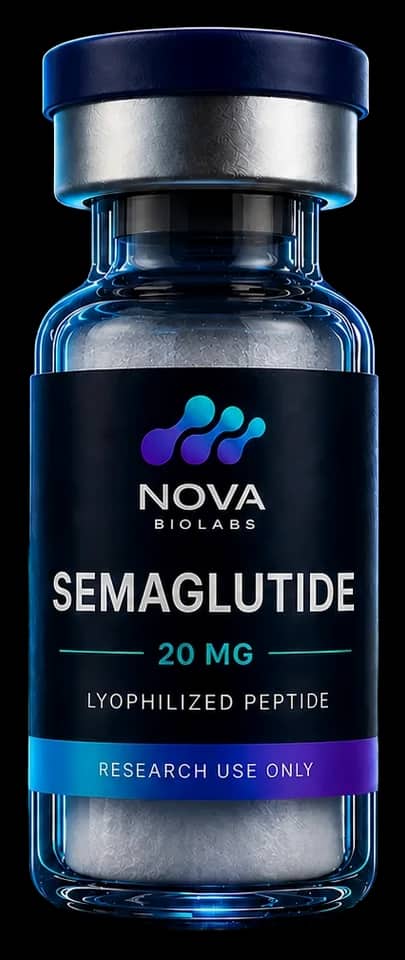
Copies one specific, well-understood gut hormone (GLP-1).
Studied in more separate research programmes than most comparable compounds.
A large trial showed 20% fewer major heart problems, such as heart attack or stroke.
Researched for reduced appetite and slower gastric emptying.
Once-weekly injections, increasing every 4 weeks.
16–68 weeks, protocol dependent.
Abdomen, thigh, or upper arm. Rotate sites.
| Week | Dose |
|---|---|
| Wks 1–4First dose | 0.25mg |
| Wks 5–8 | 0.5mg |
| Wks 9–12 | 1mg |
| Wks 13–16 | 1.7mg |
| Wk 17+Maintenance | 2.4mg |
Use the calculator at novabiolabs.co.uk/calculator for your specific vial.
On average, people lost 14.9% of their body weight over 68 weeks.
People had 20% fewer major heart problems, such as heart attack or stroke. The trial was in overweight adults without diabetes.
A single-signal compound often ordered with a dual-signal one to compare them.
CagrilintideEXTRA FULLNESS SIGNALCopies a second fullness hormone (amylin), so the two signals can add up.
BPC-157 + TB-500RECOVERYRepair peptides are commonly studied alongside longer appetite programmes.
Two of the signals lower appetite and help control blood sugar. The third, glucagon, is linked to how the body uses stored energy. Trials have reported some of the largest weight changes of any compound here.
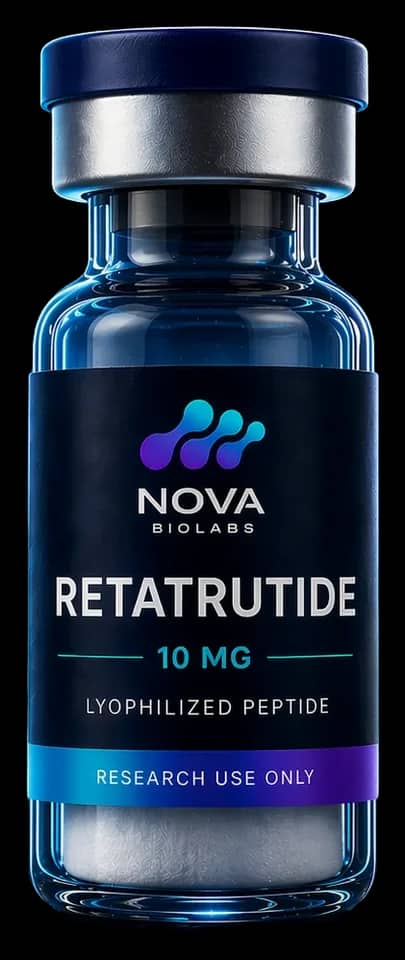
Acts on three separate metabolism and appetite signals at once.
Trial data shows some of the largest average changes of any compound here.
A human trial reported some of the largest weight changes seen for any compound.
The added glucagon pathway targets how the body manages stored energy.
Once-weekly subcutaneous injections. In the trial, it took about 24 weeks to reach 12mg.
24–104 weeks, protocol dependent. Trials have run for up to 104 weeks.
Abdomen, thigh, or upper arm. Rotate sites.
| Week | Dose |
|---|---|
| Wks 1–6First dose | 2mg |
| Wks 7–12 | 4mg |
| Wks 13–18 | 8mg |
| Wk 19+Maintenance | 12mg |
Use the calculator at novabiolabs.co.uk/calculator for your specific vial.
On average, people on the 12mg dose lost 24.2% of their body weight over 48 weeks.
Reported by the maker, Lilly: on 12mg, people lost 28.3% of body weight on average over 80 weeks. Those who continued to 104 weeks lost 30.3%.
Amylin works on fullness in a different way to GLP-1, so this is usually researched alongside a GLP-1 compound rather than on its own, to see whether the two signals add up.
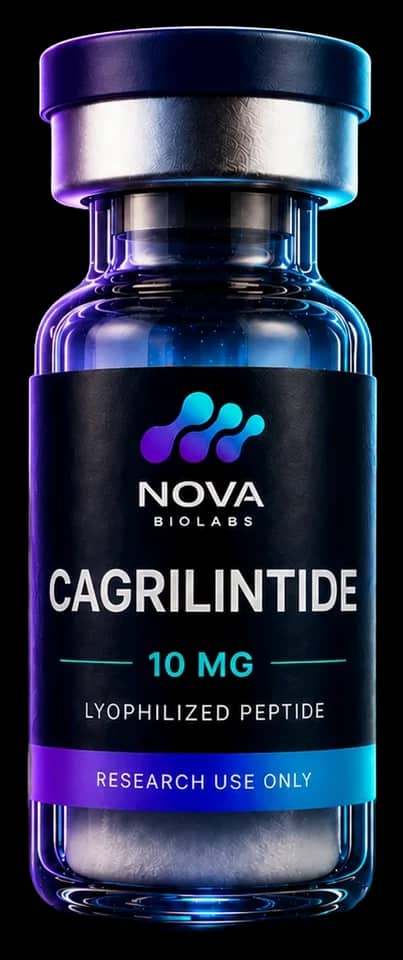
Targets amylin, a different fullness pathway to the GLP-1 compounds here.
Researchers pair it with a GLP-1 to study whether two signals add up.
Increasingly studied in combination programmes.
Copies a natural signal released alongside insulin after eating.
Once-weekly injections, increasing every 4 weeks.
16+ weeks, typically alongside a GLP-1 compound.
Abdomen, thigh, or upper arm. Rotate sites.
| Week | Dose |
|---|---|
| Wks 1–4First dose | 0.3mg |
| Wks 5–8 | 0.6mg |
| Wks 9–12 | 1.2mg |
| Wk 13+Maintenance | 2.4mg |
If already running a GLP-1, treat this as an addition, not a second full schedule — stomach-related side effects from both can add up.
Copies amylin — a second, separate fullness signal to Tirzepatide, Semaglutide or Retatrutide.
The dosing here follows common research practice rather than a completed human trial.

Compounds researched for wound healing, tendon and joint repair, and general tissue regeneration — locally at the injection site, systemically through the body, or both.
BPC-157 is researched for helping tissue heal at the spot it reaches, such as tendon, muscle or gut lining. TB-500 is researched for wider healing effects around the body. Together they’re studied for injury recovery.
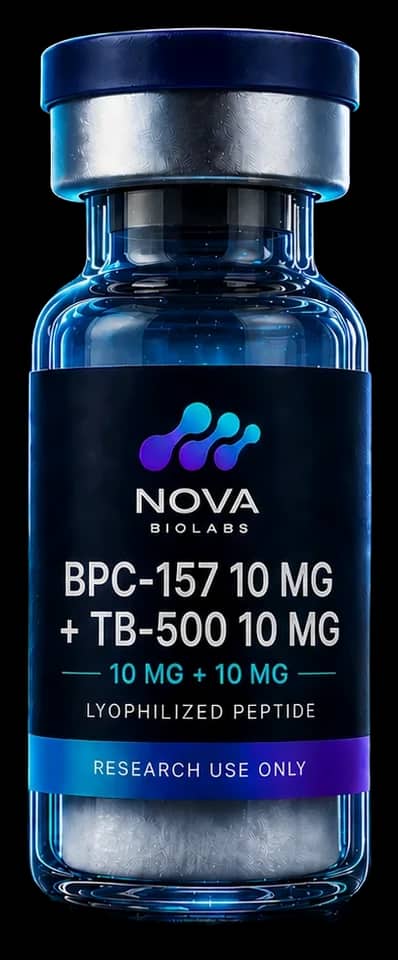
BPC-157 is mostly studied for effects at the specific site it reaches.
TB-500 is mostly studied for effects that may reach more widely around the body.
Researchers are curious whether local and wider effects complement each other.
Combines two of the most widely-researched repair peptides in one vial.
Daily subcutaneous injections. Some protocols use intramuscular injections, which need hands-on training.
4–8 weeks per cycle, then a break of about 4 weeks.
Abdomen or thighs, areas with fat. Rotate sites. Injecting near an injury is a decision for a healthcare professional.
| Week | Dose |
|---|---|
| Wk 1First dose | 250–500mcg |
| Wk 2 | 250–500mcg |
| Wk 3 | 250–500mcg |
| Wk 4 | 250–500mcg |
| Wks 5–8If continuing | 250–500mcg |
Neither compound has a completed published human trial — all dosing is extrapolated from animal research and community practice.
Tendon, ligament, muscle and gut lining — works mostly where it is injected.
A version of thymosin β4, researched for new blood vessel growth, cell movement and calming inflammation.
GHK-Cu is a copper peptide researched for collagen, the protein that keeps skin firm. Paired with BPC-157 and TB-500 for tissue repair, the blend is studied for skin quality, recovery and healthy ageing.
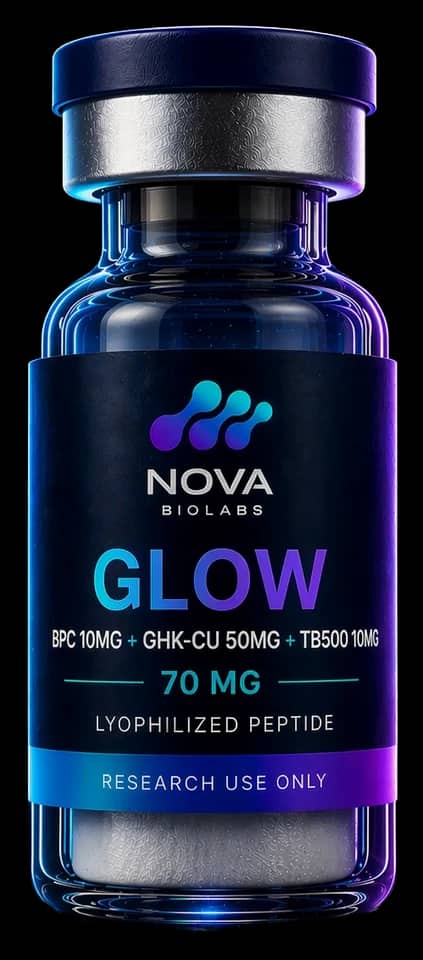
GHK-Cu is researched for boosting the body’s own collagen production.
Combines three compounds studied for skin health and regeneration.
Researched for tissue renewal and antioxidant protection.
One pre-mixed vial combining three individually-studied compounds.
Add 2.5mL of bacteriostatic water to the 70mg GLOW vial.
Daily or every-other-day (EOD) subcutaneous injections.
4–8 weeks, then a break of about 4 weeks.
Abdomen or thighs, areas with fat. Rotate injection sites each time.
| Week | Dose | Draw |
|---|---|---|
| Wk 1First dose | 2.8mg | 10 units |
| Wk 2 | 2.8mg | 10 units |
| Wk 3 | 2.8mg | 10 units |
| Wk 4 | 2.8mg | 10 units |
| Wks 5–8If continuing | 2.8mg | 10 units |
No escalation is reported in the source guide for GLOW. Figures assume the 2.5mL mixing volume above.
Supports collagen production, skin tone, and elasticity.
Supports tissue repair and recovery.
Supports mobility, recovery, and cellular repair.
The same skin-renewal and repair blend as GLOW, plus KPV, a small peptide researched for calming inflammation. It’s studied for skin, healing and reducing irritation in tissue.
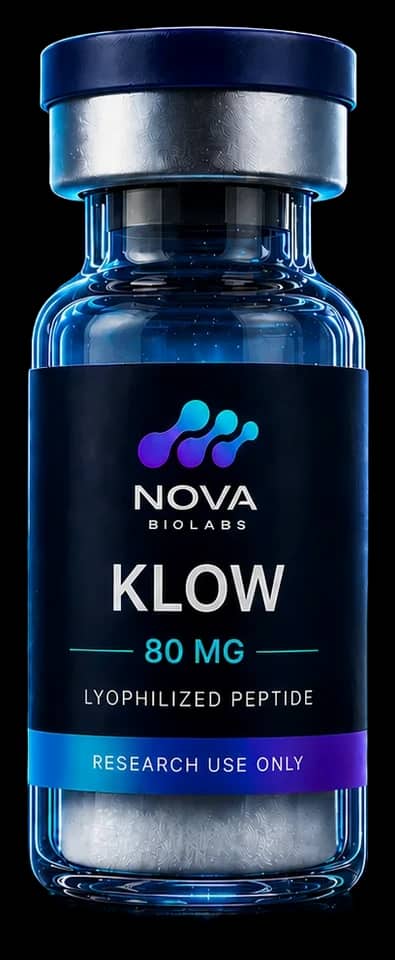
KPV is a small peptide researched for calming inflammation.
Same tissue-repair and skin-regeneration profile, in a larger vial.
Combines four individually-studied ingredients in one vial.
Researched for collagen production and cellular repair.
Daily or every-other-day (EOD) subcutaneous injections.
4–8 weeks, then a break of about 4 weeks.
Abdomen or thighs, areas with fat. Rotate injection sites each time.
| Week | Dose |
|---|---|
| Wk 1First dose | ~3.2mg |
| Wk 2 | ~3.2mg |
| Wk 3 | ~3.2mg |
| Wk 4 | ~3.2mg |
| Wks 5–8If continuing | ~3.2mg |
No escalation is reported in the source guide for KLOW. The ~3.2mg/day figure scales GLOW’s dose up to KLOW’s 80mg vial and is an estimate, not a directly-sourced figure.
Supports collagen production, skin tone, and elasticity.
Repair at the injection site and across the body.
A small peptide well researched for calming inflammation.

Compounds researched for stimulating the body’s own growth hormone release, or replacing it directly — for body composition, recovery, and general anti-ageing research.
Growth hormone is released in pulses, mostly during deep sleep. These two work on different steps of that release, so they’re researched for boosting your natural pulses — which is why they’re often taken before bed.
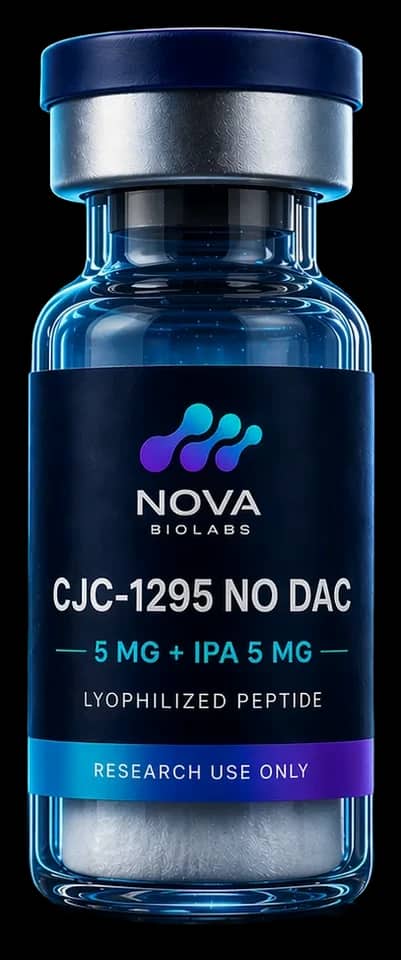
This No DAC form clears in under an hour, closely mimicking your body’s own natural GH-release pulse.
Ipamorelin triggers release with fewer unwanted side effects.
Studied for acting on two different steps of the same release process.
Most common protocol aligns with the largest natural nocturnal GH pulse.
2–3 subcutaneous injections daily, most commonly pre-sleep.
8–12 weeks, then a break of about 4 weeks.
Wait at least 2 hours after a carbohydrate meal before injecting.
| Week | Dose |
|---|---|
| Wk 1First dose | 100mcg each |
| Wk 2 | 100mcg each |
| Wk 3 | 100mcg each |
| Wk 4 | 100mcg each |
| Wks 5–12If continuing | 100mcg each |
No escalation is reported in the source guide. Avoid if you have an active cancer or diabetic eye disease (retinopathy). Two different forms exist — this page and Nova’s vial are No DAC, dosed several times a day. A separate “with DAC” form is dosed once or twice weekly at a much higher 1–2mg per shot; don’t apply that weekly dose to this vial.
The short-acting form Nova stocks — cleared within about an hour, which is why it’s dosed multiple times a day rather than weekly.
Prompts a clean burst of growth hormone with minimal effect on cortisol (the stress hormone) or appetite.
It prompts your body to make more of its own growth hormone. It’s researched mainly for reducing deep belly (visceral) fat, and it’s one of the few compounds here approved as a medicine for a specific use.
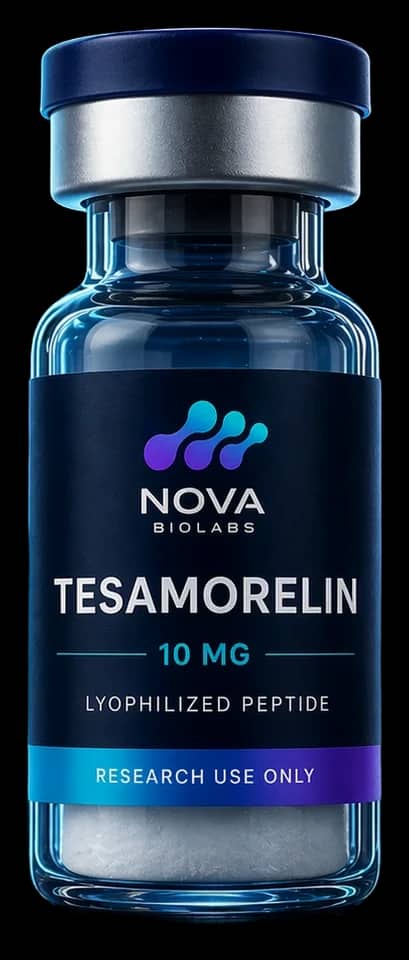
One of very few compounds here with a completed human trial and official approval.
Specifically studied for reducing a type of internal body fat.
A randomised trial also showed improved cognitive function at 20 weeks.
Shows a full, completed research and approval journey.
Once-daily subcutaneous injection. The official label gives no time of day. Many people take it fasted (at least 2 hours after a meal), often before bed.
12–26 weeks, then a break of 4–8 weeks by convention.
Abdomen, in areas with fat. Rotate sites, and avoid scars, bruises and the belly button.
| Week | Dose |
|---|---|
| Wk 1First dose | 2mg |
| Wk 2 | 2mg |
| Wk 3 | 2mg |
| Wk 4 | 2mg |
| Wks 5–26If continuing | 2mg |
Avoid if you have an active cancer or a pituitary condition, or if you are pregnant.
Approved by the US medicines regulator (the FDA) for excess belly fat in adults with HIV-related lipodystrophy. First approved at 2mg daily; the current label for Egrifta SV uses 1.4mg daily. Not approved for weight loss.
A randomised trial also showed better thinking and memory scores at 20 weeks, though fat loss reverses once it is stopped.
Growth hormone helps the body repair tissue, build protein and process fat. It has been used in medicine for decades for people who don’t make enough, and it’s the strongest and strictest option in this category.
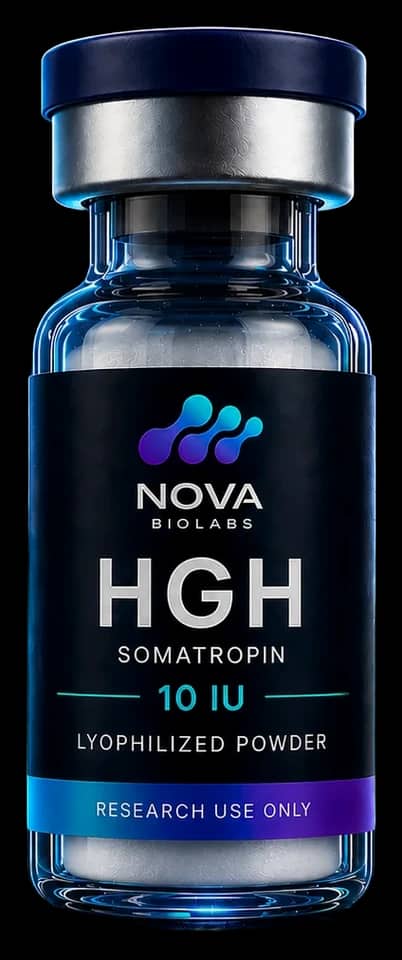
One of the longest-established lab-made hormones in medicine.
The real hormone itself, not a stimulus for your own release.
Studied and prescribed for people whose bodies don’t produce enough naturally.
Studied for building protein, breaking down fat and repairing tissue.
Once-daily subcutaneous injection, or a 5-on/2-off schedule.
Ongoing / long-term.
Abdomen, areas with fat. Rotate sites.
| Week | Dose |
|---|---|
| Wk 1First dose | 1iu |
| Wks 2–3 | 2iu |
| Wk 4+Maintenance | 2–4iu |
Avoid if you have an active cancer, diabetic eye disease, or are recovering from major surgery or a serious illness.
Measured in international units by convention (≈3iu per 1mg).
Unlike CJC-1295/Ipamorelin, this is the hormone itself, not a nudge for your body to make its own.

Compounds researched for cellular ageing, mitochondrial function, and general healthspan — a mix of the most established compound in this guide and some of the earliest-stage.
It’s researched for skin and tissue repair: helping the body make collagen, calm oxidative damage and rebuild healthy tissue. Lab studies show it influences thousands of genes, though human data is still limited.
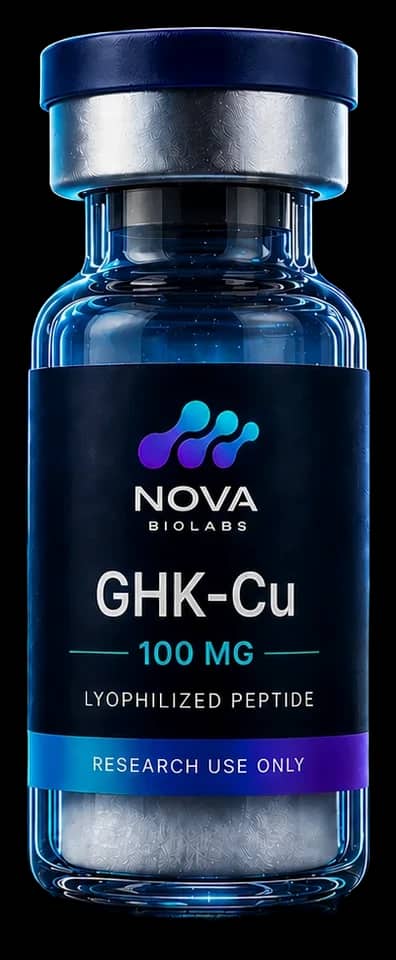
Already present in the body, in falling amounts as you get older.
Genomic analysis shows it influences over 4,000 human genes in lab studies.
Boosts the body’s antioxidant defences and collagen production.
Human data is limited, but it has been well tolerated, with no significant effects reported.
Once-daily subcutaneous injection is the source-guide convention, though some protocols use 2–3×/week instead. Topical use is typically a 0.05–0.1% cream.
8 weeks, then a break of 2–4 weeks by convention.
Abdomen, areas with fat. Rotate sites.
| Week | Dose |
|---|---|
| Wk 1First dose | 1–2mg |
| Wk 2 | 1–2mg |
| Wk 3 | 1–2mg |
| Wk 4 | 1–2mg |
| Wks 5–8If continuing | 1–2mg |
Avoid if you’ve had cancer recently, or currently do.
A study on skin cells in the lab found it influences over 4,000 human genes.
Boosts collagen, antioxidant defences and nerve repair.
Mitochondria turn food into energy, and they wear down with stress and age. SS-31 heads straight for them and is researched for protecting them and restoring energy production. It’s approved as a medicine for one rare condition.
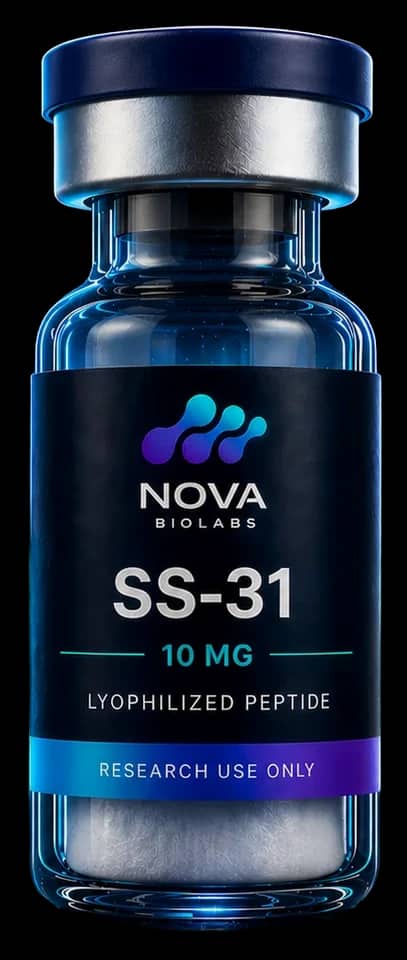
Recently approved for a rare genetic condition.
Goes straight to the mitochondria, the cell’s power stations.
Helps stressed cells make energy again.
Studied for supporting organs and tissue placed under high energy stress.
Once-daily subcutaneous injection.
4–24 weeks, then a break of about 4 weeks by convention.
−20°C before mixing — not the usual 2–8°C.
| Week | Dose |
|---|---|
| Wk 1First dose | 4mg |
| Wk 2 | 4mg |
| Wk 3 | 4mg |
| Wk 4 | 4mg |
| Wks 5–24If continuing | 4mg |
No contraindications are established in the source guide for this compound.
Helps older or stressed cells make energy again (ATP is the cell’s fuel).
Heart injury, chronic kidney disease, muscle weakness and retinal (eye) degeneration.
MOTS-c acts like a message from the mitochondria to the rest of the cell about energy. Studies link it to how muscle uses sugar and how the body responds to exercise. It’s still early-stage, mostly animal research.
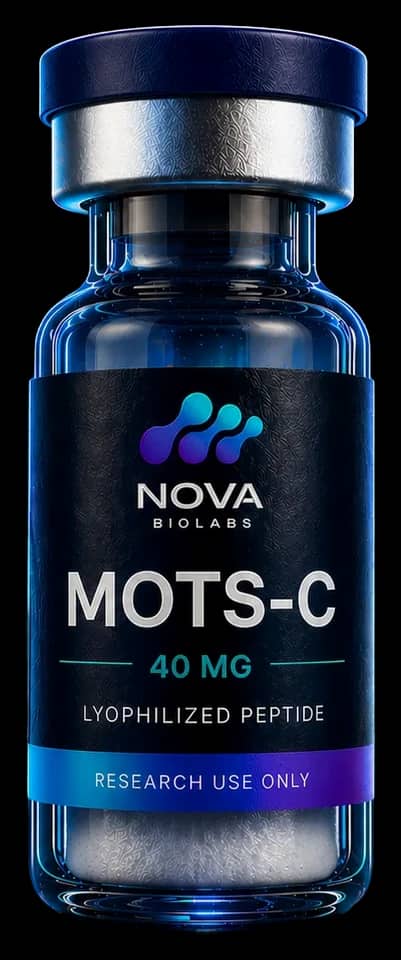
Comes from mitochondria’s own small set of instructions, not the cell’s main ones.
Some studies link natural MOTS-c levels to exercise and physical stress.
The first peptide shown to move into the nucleus under stress, where it can switch genes on and off.
Helps muscle take up sugar from the blood, even without insulin.
1–2 subcutaneous injections weekly, ideally on training days.
8 weeks, then a break of about 4 weeks by convention.
Abdomen, areas with fat. Rotate sites.
| Week | Dose |
|---|---|
| Wk 1First dose | 5mg |
| Wk 2 | 5mg |
| Wk 3 | 5mg |
| Wk 4 | 5mg |
| Wks 5–8If continuing | 5mg |
No contraindications are established for this compound. No completed human trial yet. The dosing follows common research practice, based on animal studies.
The first peptide shown to travel into the cell’s control centre (the nucleus) under stress.
Blood levels of MOTS-c also fall with age, part of the reason it is being researched.
You’ll also see it dosed differently. Some protocols use 1mg daily instead of 5mg 1–2× weekly — both are community/research conventions with no human dose-finding trial behind either, so neither is more “correct”.
NAD+ helps power your cells and supports the repair of damaged DNA. Because levels fall as we age, it’s researched for energy, healthy ageing and cell repair. It’s a coenzyme rather than a true peptide.
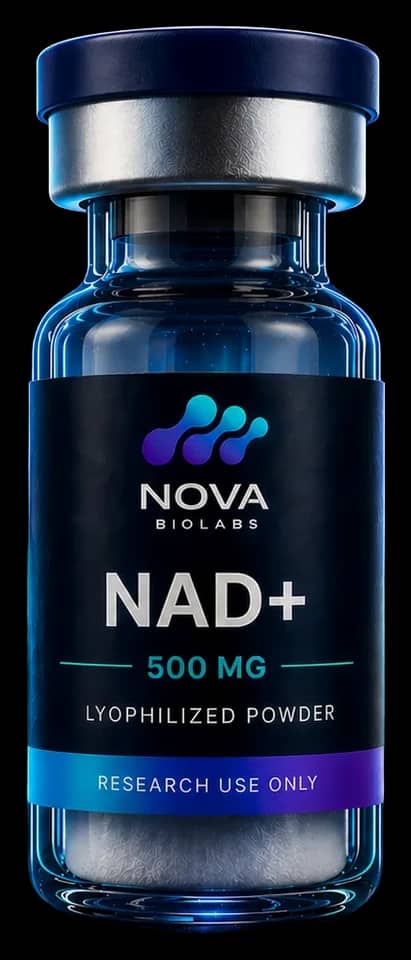
Helps cells turn food into usable energy.
Plays a genuinely essential, well-documented role in how cells work.
Falling levels with age is a well-documented laboratory finding.
Helps cells repair damaged DNA and switch on protective genes.
2–3 subcutaneous injections weekly.
4–12 weeks, cycle or ongoing.
Inject slowly. Injecting too fast can cause flushing, chest tightness or nausea.
| Week | Dose |
|---|---|
| Wk 1First dose | 50mg |
| Wk 2 | 50mg |
| Wk 3 | 50mg |
| Wk 4 | 50mg |
| Wks 5–12If continuing | 50mg |
No contraindications are established for this compound. Tablet and capsule forms (NMN, NR) are indirect ingredients that the body absorbs less well than NAD+ itself. You’ll also see it dosed differently — some protocols run a short daily loading phase before dropping to once-weekly, and some skip 2–3×/week entirely and just dose once a week throughout.
Involved in making energy, repairing DNA and switching on protective “longevity” genes — some of the most basic jobs in every cell.
Roughly 40–50% less NAD+ in body fat between the ages of 40 and 60.
Antioxidants mop up the damaging by-products that cells make as they work. Glutathione is researched for cell protection, supporting the liver’s detox work, and skin tone.
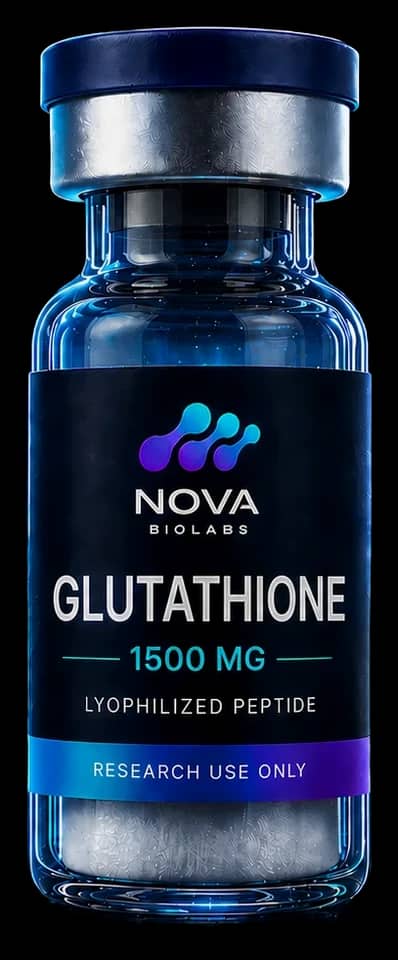
One of the most fundamental, well-studied molecules in human biology.
Neutralises damaging by-products of normal cell activity and supports the liver’s detox work.
Already used in some licensed medical products.
Also researched for its role in skin pigmentation pathways.
1–3 subcutaneous or intramuscular injections weekly.
4–12 weeks, cycle or ongoing.
Take extra care. Stop and get medical help if breathing feels tight or restricted.
| Week | Dose |
|---|---|
| Wk 1First dose | 600–1000mg |
| Wk 2 | 600–1000mg |
| Wk 3 | 600–1000mg |
| Wk 4 | 600–1000mg |
| Wks 5–12If continuing | 600–1000mg |
No contraindications are established, but take extra care if you have asthma. Some sources caution that going well past roughly 1500mg a week may raise the risk of rebound oxidation once you stop, with no proven extra benefit — if you’re at the top of this range, 1–2× a week keeps you under that.
Neutralises damaging by-products of cell activity, supports the liver’s detox work and keeps immune cells working.
Levels decline with age and oxidative stress.

Metabolism is the collection of chemical processes your body uses to obtain, store and use energy. This small chapter covers two very different compounds — one gentle and metabolism-focused, one fast-acting and appetite-focused with the most noticeable first-dose reaction in this guide.
By blocking that enzyme, it’s thought to nudge fat cells to burn energy more actively and to raise NAD+. In animal studies it reduced fat while keeping lean muscle. Human research is still limited.
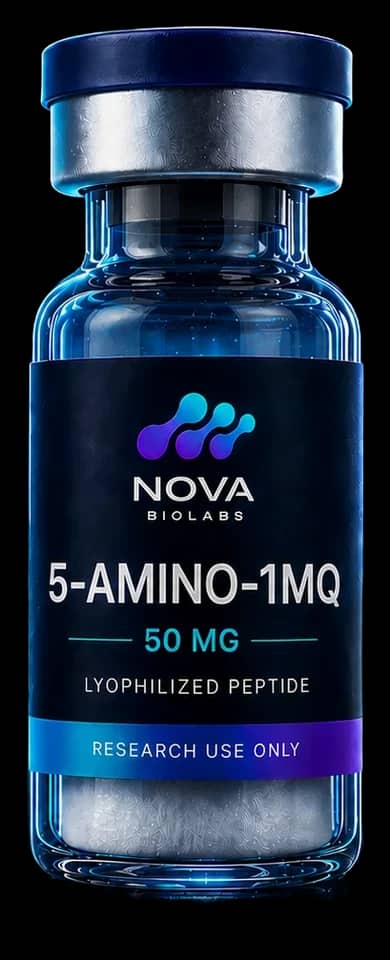
Aims at one specific enzyme rather than the whole system.
Blocking that enzyme (NNMT) nudges fat cells to burn more energy and raises NAD+.
Animal research shows preferential fat reduction with preserved lean mass.
Mechanistically synergistic with direct NAD+ supplementation.
Add 2mL of bacteriostatic water to the 50mg vial.
Once or twice daily subcutaneous injections for 4–8 weeks.
A break of 2–4 weeks between cycles is the source guide’s convention.
Abdomen, areas with fat. Rotate sites.
| Week | Dose | Draw |
|---|---|---|
| Wk 1First dose | 2.5mg | 10 units |
| Wk 2 | 2.5mg | 10 units |
| Wk 3 | 2.5mg | 10 units |
| Wk 4 | 2.5mg | 10 units |
| Wks 5–8If continuing | 2.5mg | 10 units |
No contraindications are established for this compound. Figures assume the 2mL mixing volume above. Not the same as oral capsules: 5-Amino-1MQ is also widely sold as a 50mg oral capsule, dosed far higher (50–100mg, 1–2×/day) because swallowing it loses far more to digestion. That oral dose does not apply to this injectable vial.
In animals, it reduced body fat while keeping lean muscle.
Blocks one enzyme in fat cells, which raises two other molecules cells rely on for energy and repair.
It switches on melanocortin receptors: some darken the skin, which is why it’s used in tanning research, and others reduce appetite. It’s one of the few compounds here that reached early human testing.
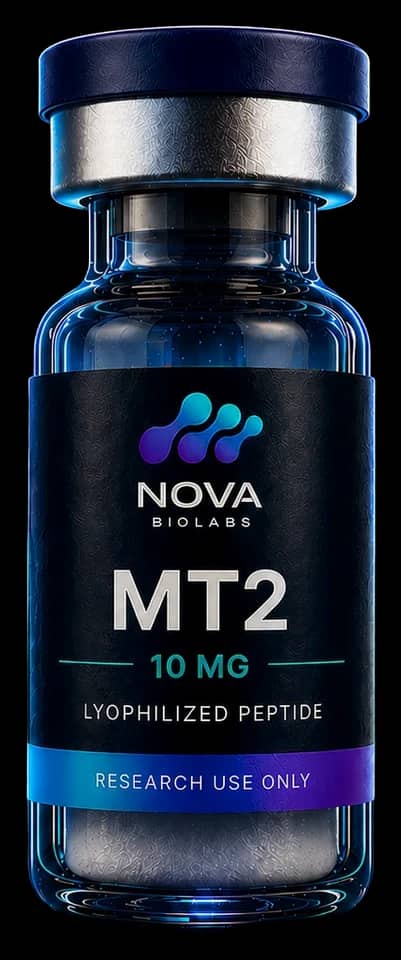
Switches on several receptors, including ones that darken skin. Widely used in tanning research.
One of the few compounds here that did reach early human testing.
Reduced appetite is a commonly reported effect.
A closely related compound went on to become an approved medicine for a different use.
Add 2mL of bacteriostatic water to the 10mg vial.
Once-daily subcutaneous injection, ideally at bedtime.
No formal cycle — a 4-week break after 8 weeks of use is a reasonable, conservative approach.
Abdomen, areas with fat. Rotate sites.
| Week | Dose | Draw |
|---|---|---|
| Wk 1First dose | 0.1mg | 2 units |
| Wks 2–7 | 0.25mg | 5 units |
| Wk 8+Maintenance | 0.5–1mg | 10–20 units |
Avoid if melanoma runs in your family, you’ve had it yourself, or you have moles that are changing. Taking it at bedtime helps you sleep through the worst of the nausea. Once pigment builds, many people drop from daily to just 1–2 lower doses a week to hold it, rather than continuing daily at the higher maintenance amount.
Switches on the hormone pathway that darkens skin pigment.
The dosing below follows common research practice, not a proven schedule.

Cognitive research looks at processes involved in areas such as attention, memory, stress responses and signalling in the nervous system — two nootropic peptides researched for opposite ends of the same spectrum.
Semax is studied for how it supports brain-cell signalling and a growth factor called BDNF. It’s described as stimulating and focus-boosting, the opposite of Selank, and is used as a nasal spray in Russia.
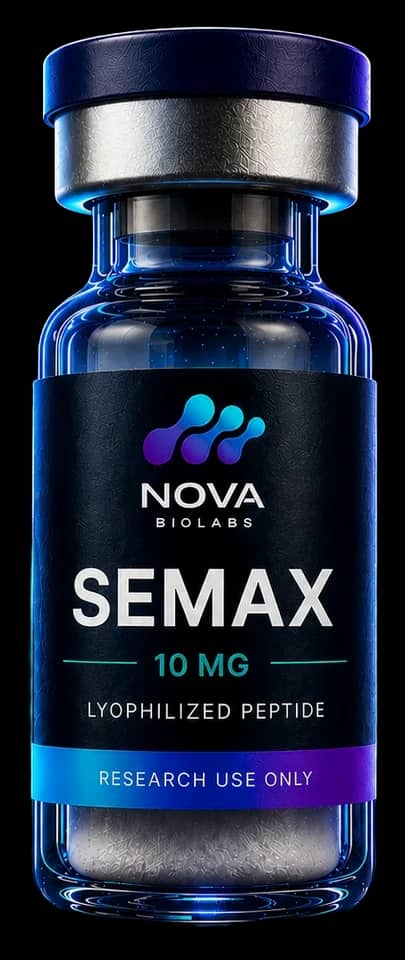
Studied for how it supports brain-cell signalling and a growth factor called BDNF.
Used clinically in one country for several decades.
Researched for alertness and focus — the opposite of Selank’s calming profile.
Short-lived in the body, though effects are reported to last longer.
Add 2mL of bacteriostatic water to the 10mg vial.
Once, or split across 2–3 subcutaneous injections daily. Semax is stimulating, so most people take it earlier in the day, not close to bedtime.
10–20 days, then a break of 1–2 weeks.
Abdomen, areas with fat. Rotate sites.
| Week | Dose | Draw |
|---|---|---|
| Wk 1First dose | 100–200mcg | 2–4 units |
| Wk 2 | 100–200mcg | 2–4 units |
Be more cautious if you have a history of seizures or anxiety, since it’s active in the brain and nervous system.
Researched for its effects on brain-cell growth and signalling.
Clears the body in about half an hour, but people report effects lasting longer, possibly because of the by-products it breaks down into.
Nasal spray vs injection. Semax’s original Russian use is as a nasal spray, usually at a higher 200–600mcg per session since less gets absorbed that way. This page covers Nova’s injectable vial — don’t apply nasal-spray amounts to it.
Selank is studied for calming effects and for how the nervous and immune systems talk to each other. It’s described as calming rather than stimulating, the opposite of Semax, and is used as a nasal spray in Russia.
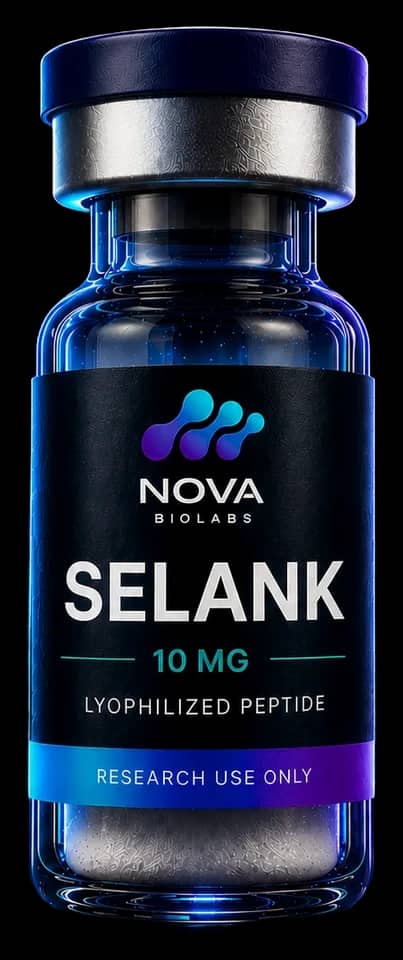
Generally calming rather than stimulating — the opposite of Semax.
Approved for anxiety-related conditions specifically, giving it a distinct, defined use.
Studied for calming effects and for how the nervous and immune systems talk to each other.
Short-lived, with effects typically reported within an hour.
Add 2mL of bacteriostatic water to the 10mg vial.
Once, or split across 2–3 subcutaneous injections daily. Selank is calming, so many people take it in the afternoon or evening.
10–20 days, then a break of 1–2 weeks.
Abdomen, areas with fat. Rotate sites.
| Week | Dose | Draw |
|---|---|---|
| Wk 1First dose | 150–250mcg | 3–5 units |
| Wk 2 | 150–250mcg | 3–5 units |
No contraindications are established for this compound.
Studied for calming, anxiety-reducing effects and for how the immune and nervous systems interact.
The two peptides are often studied together as an example of related compounds with opposite effects.
Nasal spray vs injection. Selank’s original Russian use is as a nasal spray, at a higher per-session amount since less gets absorbed that way. This page covers Nova’s injectable vial — don’t apply nasal-spray amounts to it.
All 19 compounds side by side — for deciding before you dive into the detail earlier in this guide. Copied from the Nova member guide's own comparison table.
| Compound | Category | Starting dose | Frequency | Route | Best to check with a professional if… |
|---|---|---|---|---|---|
| Tirzepatide | Weight Loss | 2.5mg weekly | Once weekly | SC | You or a family member has had thyroid cancer, or you carry the MEN2 gene |
| Semaglutide | Weight Loss | 0.25mg weekly | Once weekly | SC | You or a family member has had thyroid cancer, or you carry the MEN2 gene |
| Retatrutide | Weight Loss | 2mg weekly | Once weekly | SC | You or a family member has had thyroid cancer, or you carry the MEN2 gene |
| Cagrilintide | Weight Loss | 0.3mg weekly | Once weekly | SC | You or a family member has had thyroid cancer, or you carry the MEN2 gene |
| BPC-157 + TB-500 | Tissue Repair | 250–500mcg / 2.5–5mg | Daily / 2×weekly | SC / IM | You’ve had cancer recently, or currently do |
| GLOW | Tissue Repair | 2.8mg daily | Daily or EOD | SC | You’ve had cancer recently, or currently do |
| KLOW | Tissue Repair | ~3.2mg daily | Daily or EOD | SC | You’ve had cancer recently, or currently do |
| CJC-1295 + Ipamorelin | Growth Hormone | 100mcg each | 2–3× daily | SC | You have an active cancer or diabetic eye disease |
| Tesamorelin | Growth Hormone | 2mg daily | Once daily | SC | You have an active cancer, a pituitary condition, or are pregnant |
| Somatropin (HGH) | Growth Hormone | 1–2iu daily | Daily, or 5-on/2-off | SC | You have an active cancer, diabetic eye disease, or you’re recovering from major surgery or a serious illness |
| GHK-Cu | Longevity | 1–2mg daily | Once daily | SC / Topical | You’ve had cancer recently, or currently do |
| SS-31 (Elamipretide) | Longevity | 4mg daily | Once daily | SC | None established |
| MOTS-c | Longevity | 5mg weekly | 1–2× weekly | SC | None established — no human data yet |
| NAD+ | Longevity | 50mg, 2–3×/wk | 1–3× weekly | SC | None established — inject slowly |
| Glutathione | Longevity | 600–1000mg/session | 1–3× weekly | SC / IM | You have asthma |
| 5-Amino-1MQ | Metabolism | 2.5mg daily | Once or twice daily | SC | None established — limited human data |
| MT2 (Melanotan II) | Metabolism | 0.1mg test dose | Daily | SC | You’ve had melanoma, or you have moles that are changing |
| Semax | Cognitive | 100–200mcg | Once or split 2–3× | SC | Seizure or anxiety disorder history |
| Selank | Cognitive | 150–250mcg | Once or split 2–3× | SC | None established — no human RCT |
SS-31 storage: −20°C until reconstitution (not 2–8°C). After reconstitution, stable 28 days at 2–8°C — do not refreeze.
Why does it arrive as a powder?
Freeze-drying (lyophilising) makes the compound far more stable to store before it’s prepared.
What does "reconstitute" mean?
Adding a liquid — bacteriostatic water — to the dry powder to turn it into an injectable solution.
What’s the difference between mg and mcg?
mcg (microgram) is 1,000 times smaller than mg (milligram). 1mg = 1,000mcg.
What does "units" mean?
The markings on a standard U-100 insulin syringe. 1mL = 100 units, so 10 units = 0.1mL, on any barrel size.
Why are some schedules weekly and others daily?
It depends on how long the compound stays active in the body before it clears — this is set by the research the schedule comes from. See page 4.
Why has my vial gone cloudy?
Peptides are fragile: rough mixing, heat, time or contamination can all cloud a vial. Rest it and swirl gently; if it stays cloudy, don’t use it. See page 13.
Why do I have to use it within 28 days?
Once mixed, a peptide slowly breaks down and every needle puncture risks contamination. 28 days is a cautious safety margin. See page 19.
How do I work out how much to draw?
Use the free Nova calculator at novabiolabs.co.uk/calculator, or follow the three-step maths on page 10.
How much bacteriostatic water should I add?
Most vials use 1–2.5mL. 2mL is the most common because it gives easy-to-read syringe marks. See page 9.
Can I keep unmixed peptide in the freezer?
Yes. Dry powder can be stored at -20°C, which is best for long-term storage. Keep it away from light, and let it reach room temperature before you mix it. Once mixed, fridge only. See page 18.
Why are most peptides injected instead of taken as a pill?
Digestion breaks peptides down, and most are too large to pass through the gut or skin. So most research peptides are used by injection under the skin. A few small ones, like collagen and GHK-Cu, are the exception.
Where do the peptides in the vial come from?
Some peptides come from food, but most compounds in this guide are made in a lab by linking amino acids in a set order to copy a natural peptide. A few larger ones, like growth hormone, are made using DNA technology.
Why does purity matter?
Purity is how much of the vial is the compound you expect. It can vary between suppliers and batches, which is why checking the batch certificate of analysis (COA) is worthwhile. See page 48.
Can I take two peptides at once (stack them)?
Only share a syringe if both are studied pre-mixed that way, like BPC-157 and TB-500. Otherwise inject separately, at different sites, on each one’s own timing — see what it stacks with on its own page.
Purity is simply how much of the vial is the compound you ordered, and how much is something else, such as leftovers from manufacturing. Higher is better.
The single dark dot is something else. A lower purity means more of those dark dots, and less of what you paid for.
A vial can look perfect, with clear liquid and clean powder, and still be lower purity. Only a lab test can tell.
Each production run (batch) is different. One good batch says nothing about the next one.
If a vial is less pure than expected, the same dose contains less of the compound you think you are measuring.
A COA is a lab report for one specific batch. It is the proof of purity: it shows the result for that batch, not a blanket claim about every vial ever made.
The batch number on the certificate matches the number on your vial label.
The test date is recent, so the result is for the batch in front of you.
Look at the HPLC purity percentage. Higher is better. If it looks low or is missing, ask us.
Freeze-dried — a way of drying material so it can be stored and mixed later.
Mixing the powder with a liquid so it can be drawn into a syringe.
Injected just under the skin, not into muscle.
Starting on a low dose and increasing it gradually over a schedule.
The starting dose is the small amount you begin on; the maintenance dose is the steady ongoing amount once built up.
A planned block of time off a compound between blocks of use.
A structure on a cell that responds to a specific signal, like a lock waiting for its key.
Something that switches a receptor on.
A measure of biological activity rather than weight. HGH is dosed in IU, not mg.
Two or more compounds studied together for a combined goal. Each compound page lists what it is often stacked with.
A research study in people that tests whether a compound works and is safe. Results are often published in medical journals.
Approved by the US medicines regulator for a specific use, after formal testing. Approval for one use does not cover every other use.
A chemical message the body uses to tell different tissues what to do.
A short chain of amino acids — the small building blocks used to make proteins.
Research done outside a living body, for example in a lab dish.
Research done inside a living organism.
A dummy treatment with no active ingredient, used to compare fairly against a real treatment.
How long it takes for the amount of a compound in the body to fall by half.
Print this page or copy it into a notebook. Recording each vial and dose keeps you on schedule and inside the 28-day rule (page 19).
| Date | Week | Dose (mg / mcg / IU) | Units drawn | Time of day | Site | Notes |
|---|---|---|---|---|---|---|
Questions about mixing, storage, your dose maths or a batch? Nova Biolabs support is happy to help. And follow us on Instagram and TikTok to stay in the loop.
novabiolabs.co.uk/calculator — turn any dose into a syringe mark.
info@novabiolabs.co.uk — include your order and batch number.
novabiolabs.co.uk — all 19 compounds from this guide.
Quick questions? Message the Nova team.
Restock alerts and new guides.
Restock alerts and new guides.